
Flower Lovers Belong to the Good Side
2026. April 23., Thursday
2026. April 23., Thursday
The rose is one of the most popular ornamental plants in our country, found in almost every garden or park. To ensure it grows healthily and rewards your care with repeated, long-lasting, lush blooms and a uniquely fragrant scent, you must also provide it with proper nutrient supplementation!
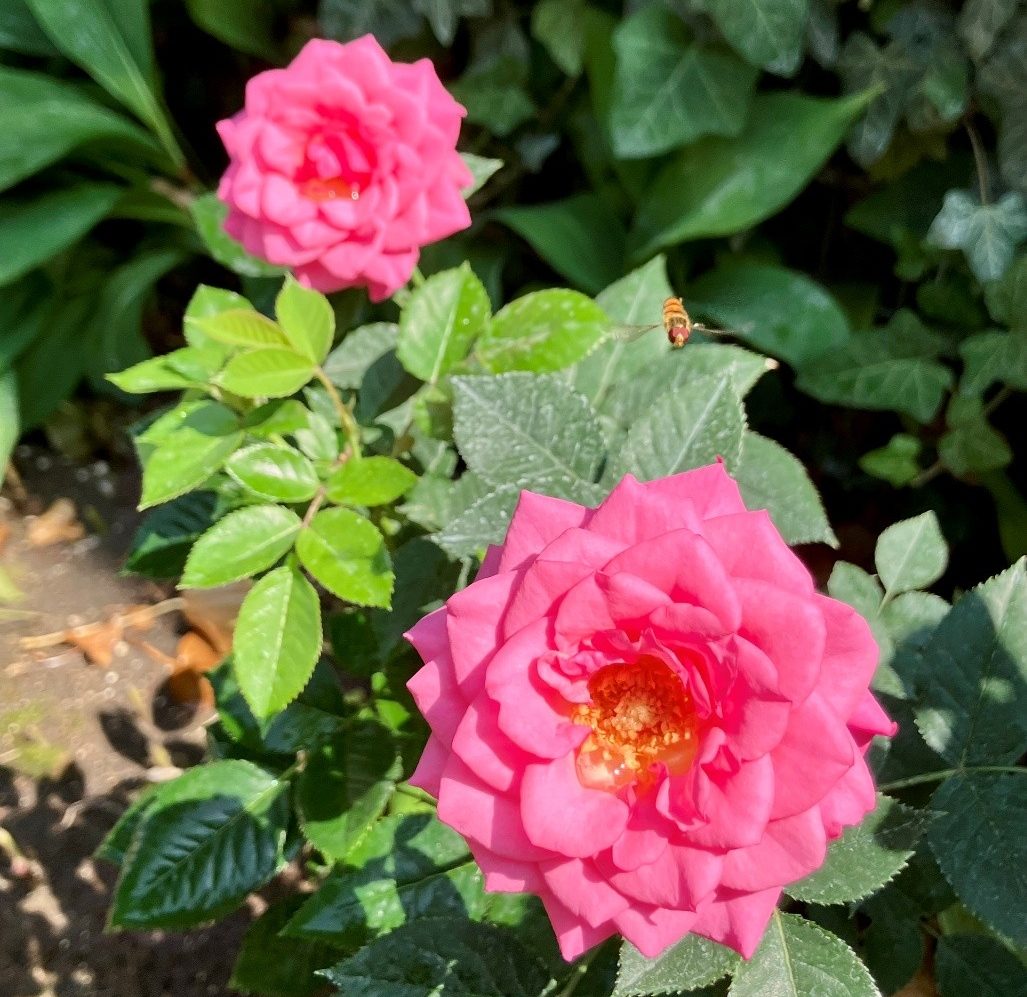
As winter comes to an end, pruning is the first step in laying the foundation for the healthy and vigorous growth of our roses in the coming season. At this time, it is important to remove all diseased or dead branches, as well as any that grow inward. This allows us to shape and prune the rose bushes while also making it easier to prevent future plant health issues, such as fungal diseases. During the frost-free period, we can further enhance this by using a wash spray to rid the roots and rose stems of overwintering pathogens and pests.
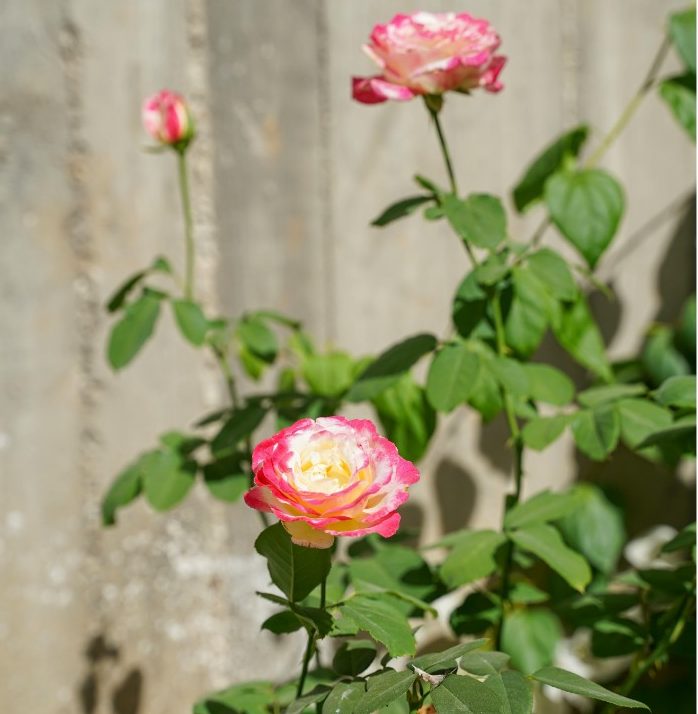
With the arrival of spring, April and May mark the time for the first round of fertilization. By this point, after their winter dormancy, our roses require specific nutrients to support further root development, the formation of new shoots, and to lay the groundwork for lush, vibrant blooms. Using compost can also be a good solution, but keep in mind that composts generally have varying nutrient compositions depending on the raw materials used to make them, and that while compost provides nutrients over the long term, it supplies fewer nutrients than most intensively flowering ornamental plants require. For this reason, it is recommended to provide our roses with additional support using products specifically developed for flowers or ornamental plants.

It is important that these nutrients are not provided in a one-sided manner, but rather in balanced proportions from a variety of sources, thereby ensuring the plants’ harmonious nutrition. Specifically, this means that we should not provide them with nitrogen alone, but rather a formulation that contains phosphorus, potassium, and micronutrients in addition to nitrogen. A deficiency in any one of these three elements causes noticeable deficiency symptoms in roses:
- The plant reacts to a nitrogen deficiency with yellowing leaves and stunted growth. However, excessive nitrogen application should be avoided, as it tends to promote increased growth of green mass—that is, foliage—while suppressing flower formation.
- Phosphorus deficiency results in slow and sluggish development, as well as few rosebuds and consequently few flowers.
- In the case of potassium deficiency, flowering is weak, colors are paler, and the plant becomes much more susceptible to diseases, while its winter hardiness also decreases.
These symptoms can be easily avoided by using a reliable, high-quality product, such as Genezis Special Flower Garden NPK. This product contains all three macronutrients in proportions specifically tailored to the needs of flowers, and it also has a high sulfur content, which further enhances the absorption and utilization of the nutrients taken up. Roses also require magnesium and iron separately. Among other things, for the development of beautiful, green, and healthy foliage, since both elements play a role in the formation of chlorophyll (the green pigment) and are therefore essential for photosynthesis.
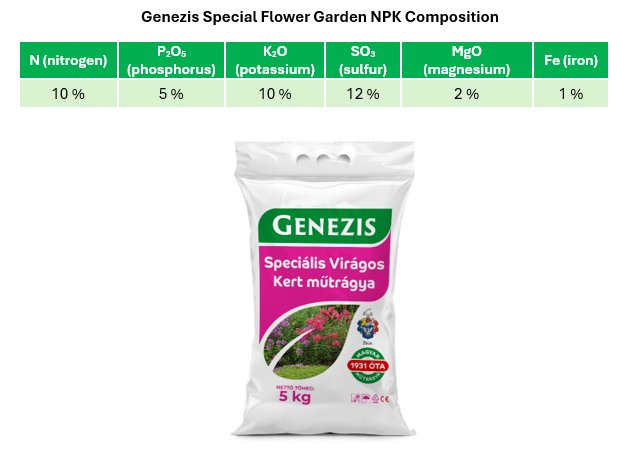
During the spring, scatter a handful of the product around the base of each rose, work it lightly into the surrounding soil, and water it in. Thanks to the product’s special ingredients and formulation, it begins to exert its nourishing effect even with the slightest amount of moisture, ensuring rapid and spectacular growth.
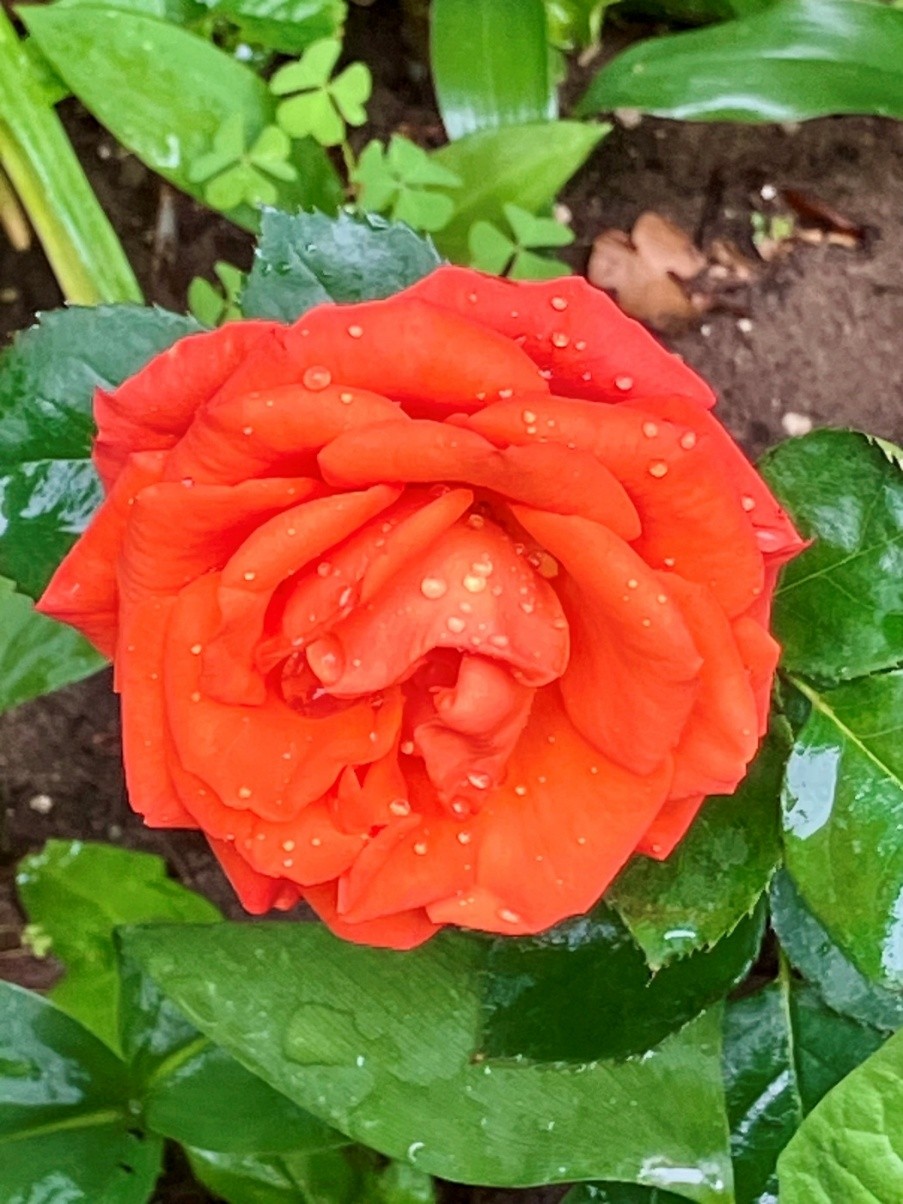
During this period, we must also pay attention to watering and protecting against pests, such as aphids! If there is little rainfall in the spring, it is important to water our roses regularly. However, keep in mind that roses do not like standing water, which can easily lead to problems such as root rot. For this reason, watering should be regular but moderate, just like nutrient supplementation. With the latter as well, regular but moderate application yields the best results. The solid granular product is continuously released through watering and rainfall, nourishing both our flowers and the soil life beneath them. However, it is clear that the amount applied earlier will not provide enough nutrients to sustain the roses and stimulate intensive flowering throughout the entire season; therefore, the application of new nutrients must be repeated periodically, for example, after 3–4 weeks. Since by this time, as summer begins, we are already watering regularly and must also spray to prevent fungal and insect damage, we have the option of using another liquid product to address nutrient replenishment. With the Genezis Pétisol phosphorus- and potassium-rich irrigation and foliar fertilizer, we can provide additional support. In addition, this product provides micronutrients (boron, copper, and zinc) that we haven’t supplied before, but which are essential for maintaining vitality and promoting the development of beautiful, vibrant flowers.
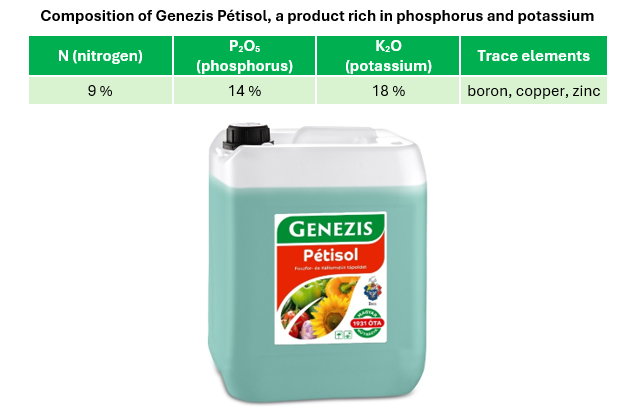
The product can be applied as a foliar fertilizer in conjunction with plant protection spraying or mixed with irrigation water as a nutrient solution. Its nutrient content is in a form that plants can immediately absorb and utilize, which aids in nutrient uptake as well as the circulation and utilization of other nutrients within the plant. For foliar fertilization, it can be applied 2–3 times during the growing season at a concentration of 1–2% (v/v), using 1–2 dl of the product per 10 l of water per 100 m². For nutrient solution irrigation, apply at a dilution of 0.05–0.1% (v/v) directly to the previously moistened rose bushes, repeating as needed according to the plants’ requirements.
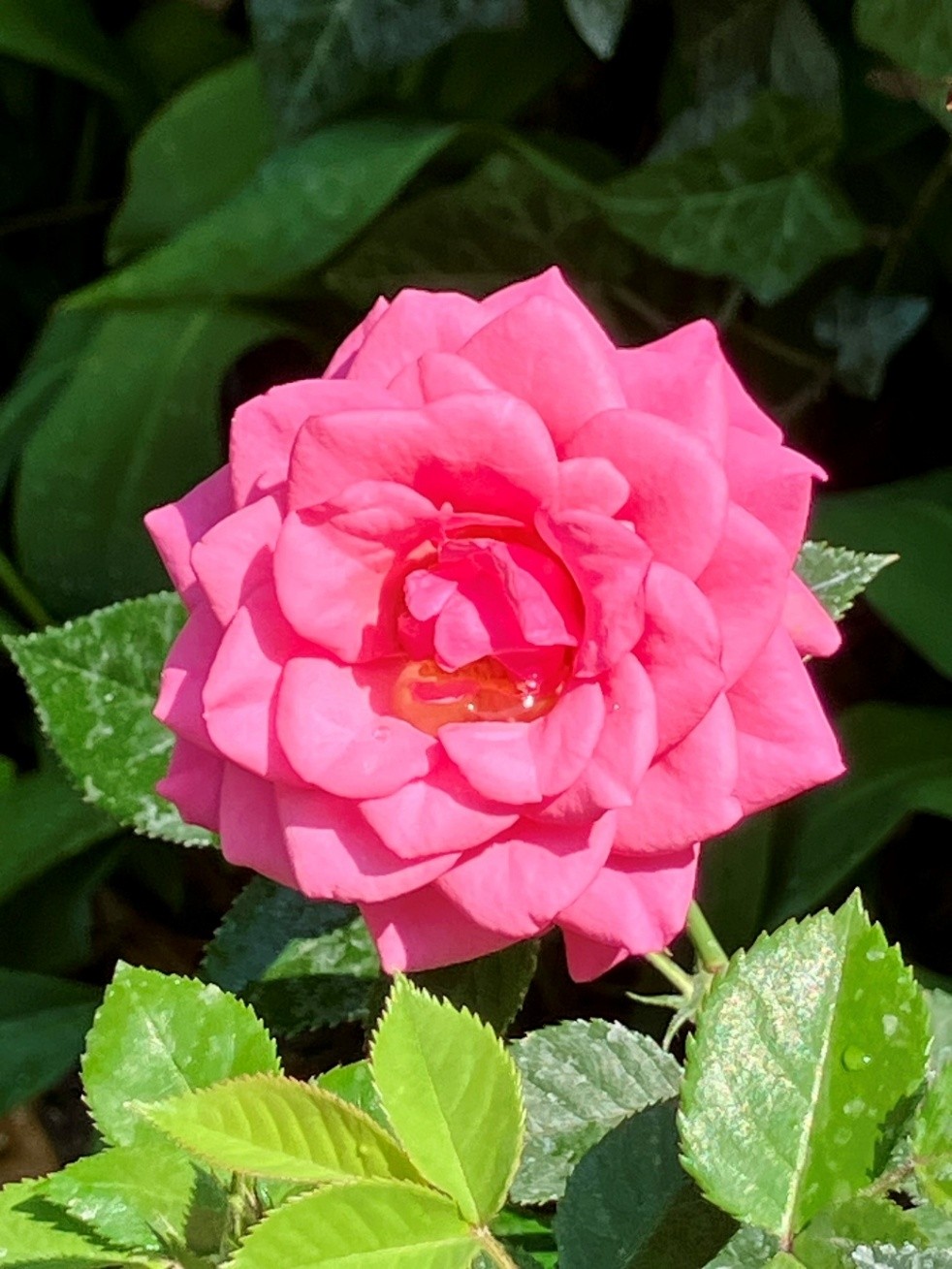
Don’t hesitate to use Genezis products, specially developed for ornamental plants and flowers, to ensure healthy plants and long-lasting, lush, and colorful blooms!
Author: Dr. Csongor Kiss, Head of Product Development, Nitrogénművek Zrt.