The top-dressing cultivator is a tool for professionals!
2026. June 10., Wednesday
2026. June 10., Wednesday
The purpose of top-dressing corn is to provide the plant with the necessary amount of nitrogen fertilizer at the right time. However, this fundamental goal is complemented by other tasks. This is because corn needs not only nitrogen, but also calcium, magnesium, and sulfur, for example. Furthermore, the weed-suppressing, soil-aerating, and water-retention benefits of cultivating are also significant.
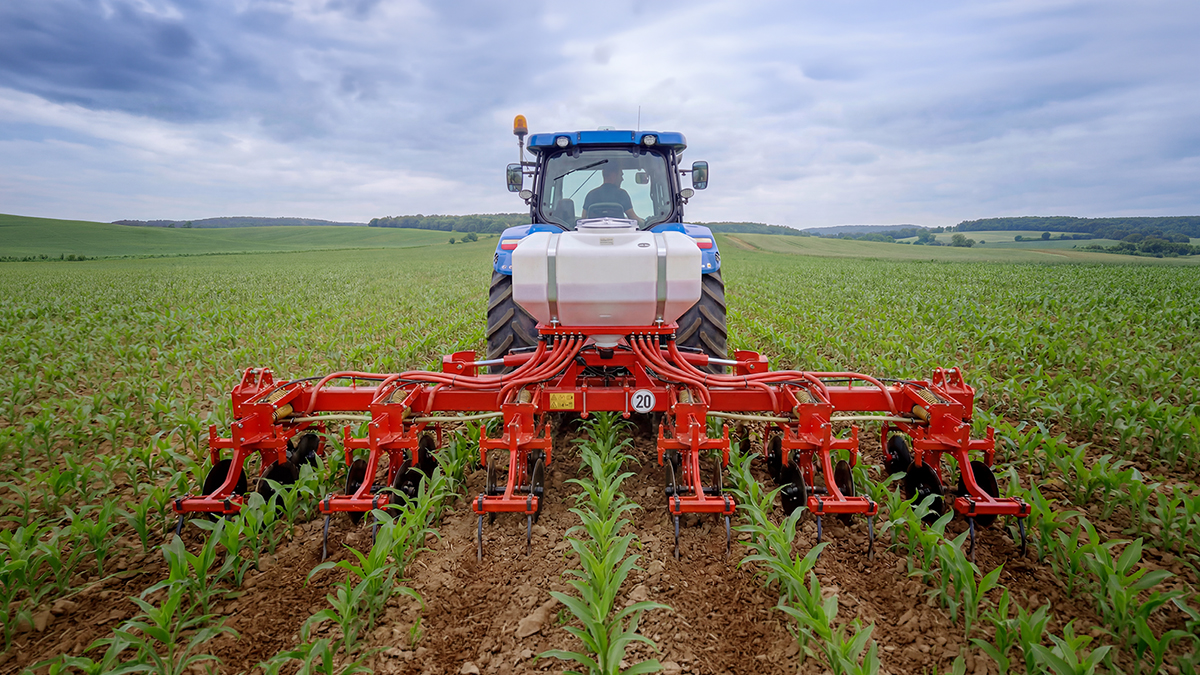
The topdressing cultivator is an essential tool for professional corn growers. As noted above, its effectiveness is based partly on its beneficial effect on soil condition and partly on the application and incorporation of topdressing fertilizer.
Before cultivating with a cultivator, you must determine the appropriate dose, the timing of application, and select the most suitable product. A good guideline for the dose is that corn’s specific nitrogen requirement ranges from 18 to 25 kg/t, depending on the yield level.
Thus, once the expected yield is known, the top-dressing rate can be calculated relatively easily.
The timing of application should be chosen so that it occurs shortly before the nitrogen-demanding growth stage. It is ideal if this is followed by rainfall, although this is quite difficult to predict with certainty.
But what exactly are these nitrogen-demanding growth stages?
he figure below clearly illustrates them—and much more besides!
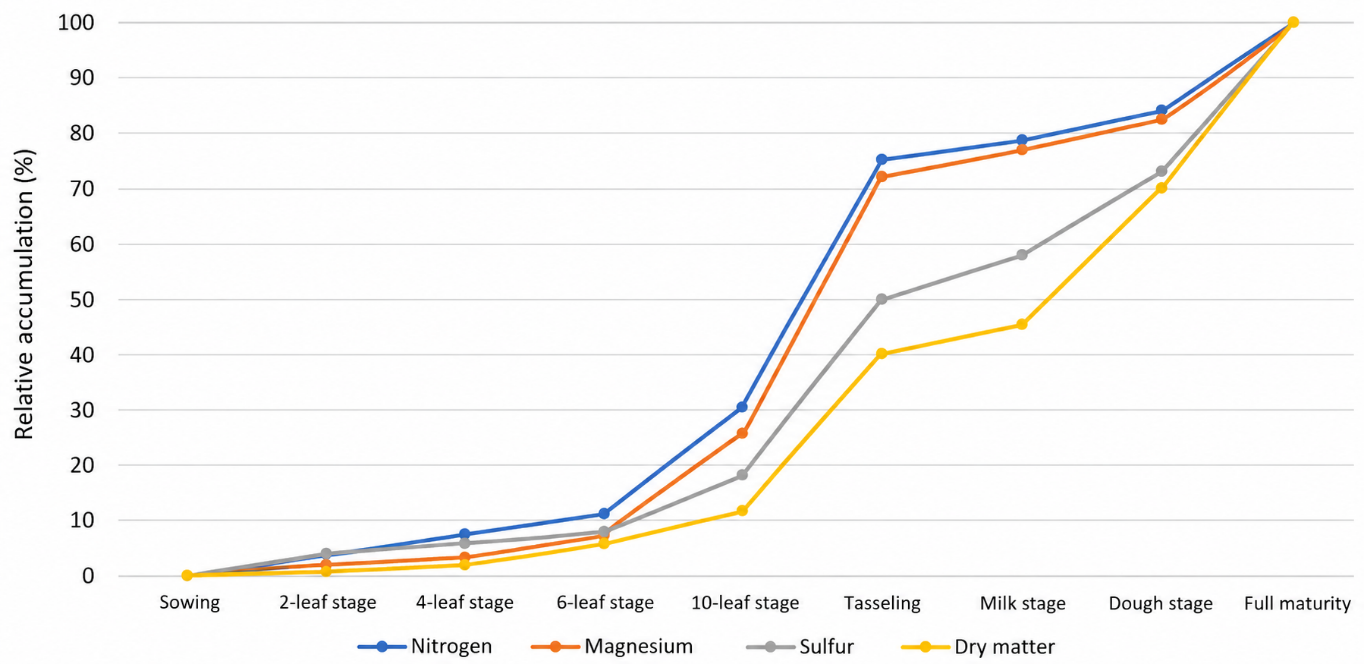
Figure 1: Dynamics of nutrient uptake and dry matter accumulation in corn [%]
The figure clearly shows that, up until the 6-leaf stage, corn absorbs barely 10% of its nitrogen requirement and less than 10% of its magnesium and sulfur requirements. This is further supported by the fact that dry matter production also remains well below 10% during this period. In other words, there is no point in applying fertilizer well before this phenological stage.
At this stage, however, it is necessary because both nutrient uptake and organic matter accumulation accelerate, although this process only becomes truly intense at the 8–10-leaf stage. Of course, the ideal situation would be if we could (or, more precisely, wanted to) top-dress the corn twice (between the 6- and 10-leaf stages), as this is the best way to ensure a continuous supply of nutrients. This would be beneficial both because of the division of doses and because of the two weeding operations.
Now let’s move on to the products.
As shown in the figure, the rate of nitrogen uptake by corn is closely mirrored by its uptake of magnesium (which moves almost perfectly in tandem with it) and sulfur, a trend also confirmed by the rate of organic matter production. In other words, it is advisable to choose a nitrogen fertilizer that also contains magnesium or sulfur. On the one hand, because corn uses significant amounts of both elements (approximately 40–60 and 20–35 kg/ha, respectively), and on the other hand, because in certain parts of the country, magnesium and sulfur deficiencies limit yield.
Magnesium supplementation is essential for combating heat stress and for organic matter production.
It is important to keep in mind that acidic soil is one of the most insidious factors contributing to reduced yields.
If you need to replenish nitrogen, calcium, and sulfur at the same time, Pétisó+S 24-12 or Pétisó S-Max 20-18 are good choices. Both are granular products; the former is suitable for replenishing smaller amounts of calcium and sulfur, while the latter is suitable for replenishing larger amounts.
For those who prefer liquid formulations, we recommend Nitrosol (30% N), which is also available in a sulfur-enriched version (27% N + 3% S) or a micronutrient-enriched version (30% N + Cu, Zn, Mn). This urea-ammonium nitrate solution is crystal clear and easy to handle, but its use as a top dressing on corn is recommended only with a fertilizer cultivator suitable for liquid application; it must not come into contact with the corn leaves or stalks.
To ensure optimal yields and profits, choose the highest-quality fertilizer that best suits your needs!
Pétisó, Green Max, Pétisó+S, or Pétisó S-Max!
Author: Dr. Csaba Varga, Technical Advisor and Senior Researcher, Nitrogénművek Zrt.